









출고예상일 안내
주문하신 상품이 한국에서 현지 배송을 위한 출고단계가 이루어질 것으로 예상되는 날짜입니다. 상품을 준비하는 과정에서 내부적인 사정으로 인해 출고예상일에 다소 오차가 생길 수 있습니다.
여러 상품(예약상품포함)을 함께 주문하신 경우 출고예상일이 가장 늦은 날짜에 맞춰 함께 배송됩니다.


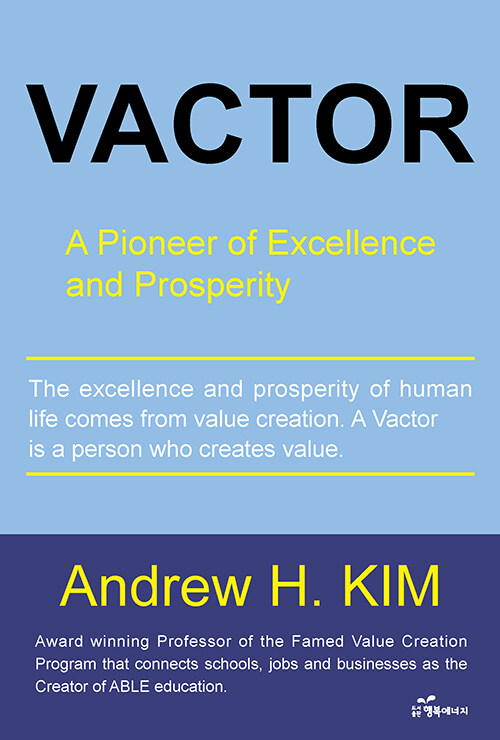





ISBN : 9791192486918 / 432쪽 / 821g / 178 x 251 (㎜)
이 상품에 궁금하신점이 있으세요? 1:1상담문의



아래의 도서와 구매하시면 이 도서들의 적립금을 즉시적용해 드립니다.
-
-

최영우, 김은경, 김지형, 박선영, 안중수, 윤경록, 이경무, 이공희, 이원석, 한상권, 한용현
-

가제노타미
-
대릴 페어웨더
- 21,600
- 20,700
- 17,100
- 17,820


출판사 리뷰
추천사
Professor Kim is a very genuine figure dedicated to the advancement of democracy and education in Korea.
- Ki-su Lee (Emeritus professor at Moscow State University, former president of Korea University)
Albert Einstein said that the highest value in nature is simplicity. As the author said, the excellence of our lives also comes from simplicity.
- Sang-hee Lee (Chairman of the Green Life Institute, former Minister of Science and Technology)
I expect that this book will contribute to creating a more humane society, a peaceful and beautiful world.
- Ki-pyo Jang (Director of the New Civilization Policy Institute, former Representative of the Social Democratic Party of Korea)
The author pursues plus-sum, not zero-sum. I always support his journey towards common prosperity of mankind.
- Aleksandr Nekipelov (Dean of Economics, Moscow State University, Vice President of the Russian Academy of Sciences)
This book is already interesting just for its title. Because everyone wants a life of excellence and prosperity, but they don't know how.
- Andrey Selivanov (Head of Dept. of the CIS State Committee, deputy of the State Duma 1993-2003, 16-time world champion on chess composition)
Students at Moscow State University love Professor Kim's lectures. His lectures are always exciting, informative and even insightful.
- Maria Alexeeva (Graduate student at the Faculty of Economics, Moscow State University)
----------------------------
Prologue
People are working hard under the hot sun. This work is 

-
- 저자 : Andrew H. Kim

Preface\t\t\t\t\t\t\t\t\t004
Acclaim for Andrew KIM and ABLE education\t\t\t\t012
Praise for
Prologue\t\t\t\t\t\t\t\t026
Part I.
Space between Stimulus and Response: Decision and Choice
Chapter 01. Map to understand the world: Mental Models
1. Perspectives on Human beings\t\t\t\t\t041
1) Psychoanalysis and Behaviorism\t\t\t\t041
2) Cognitive Development Theory and “Cognitive Revolution”\t045
2. How does the human brain process “information”\t\t\t046
3. Mental Models (MM)\t\t\t\t\t\t\t052
4. Functions of Mental Models\t\t\t\t\t\t060
5. Mental Models as Lenses, Biases and Tools\t\t\t\t065
1) Lenses\t\t\t\t\t\t\t066
2) Biases\t\t\t\t\t\t\t068
3) Tools\t\t\t\t\t\t\t\t070
6. Hard mental models and Soft mental models\t\t\t\t075
Chapter 02. Understanding how the System works
1. Systems and Mental Models\t\t\t\t\t\t086
1) What is a System?\t\t\t\t\t\t086
2) System and IPO model\t\t\t\t\t091
3) Little’s Law\t\t\t\t\t\t\t093
2. Mechanism of some Systems\t\t\t\t\t\t100
1) A system called a fan\t\t\t\t\t\t100
2) “Organizations” and “Corporations”\t\t\t\t106
3) Business system\t\t\t\t\t\t110
4) System called “Capitalism”\t\t\t\t\t112
5) The system of “Money”: Compounding and Leverage\t\t122
Chapter 03. Improvement and Utilization of the System
Before started\t\t\t\t\t\t\t\t130
1. How to improve the system\t\t\t\t\t\t131
1) One Level Higher\t\t\t\t\t\t131
2) Theory of Constraints\t\t\t\t\t\t134
3) First principle\t\t\t\t\t\t141
2. Use of feedback loop\t\t\t\t\t\t\t145
1) Understanding feedback loops: some example\t\t\t147
2) Use of feedback loop\t\t\t\t\t\t149
3) What well-designed feedback loops have in common\t\t152
3. A system called “Luck”\t\t\t\t\t\t155
1) Magic potion\t\t\t\t\t\t\t156
2) 4 stages of luck and “luck surface area”\t\t\t156
3) Improving the luck system: 5 ways to increase your “luck surface area”158
Chapter 04. Decision-making methods for value creation
Before started\t\t\t\t\t\t\t\t161
1. Making a decision\t\t\t\t\t\t\t163
1) Long-term: Regret Minimization\t\t\t\t163
2) Medium-term: Pareto Principle\t\t\t\t166
3) Short-term: ICE\t\t\t\t\t\t167
4) Immediate: Eisenhower Matrix\t\t\t\t\t170
2. Systems thinking\t\t\t\t\t\t\t171
3. Game theory\t\t\t\t\t\t\t\t180
4. Second-order thinking\t\t\t\t\t\t187
5. Marginal thinking and sub goals\t\t\t\t\t191
1) Marginal thinking and holistic thinking\t\t\t\t191
2) Sub goal\t\t\t\t\t\t\t197
6. Numeracy and Analytical Thinking\t\t\t\t\t200
7. Optimization: Linear Programming\t\t\t\t\t207
8. Probabilistic Decision Making\t\t\t\t\t\t211
1) Bad Decisions but Luck vs. Good decisions but bad luck\t214
2) Think Like a Poker Player\t\t\t\t\t215
3) How to think of betting in three steps\t\t\t\t215
9. Backwards reasoning\t\t\t\t\t\t\t217
10. The 3 stages of decision making and simplification\t\t\t221
Part II. Competence and Performance
Chapter 05. Meta-cognition and Circle of Competence
1. Value creation and Competence\t\t\t\t\t230
2. Competence and Meta-cognition\t\t\t\t\t236
3. Competence and Circle of Competence\t\t\t\t247
1) What is the circle of competence?\t\t\t\t247
2) If so, how can you find your circle of competence?\t\t251
4. Negative capability\t\t\t\t\t\t\t254
Chapter 06. Pareto’s Principle
Episode: Reverend John Maxwell\t\t\t\t\t263
1. Non-linear: efforts and results\t\t\t\t\t265
2. Pareto Principle and Performance\t\t\t\t\t268
3. Focus on High-value areas!\t\t\t\t\t\t276
4. Practice the Pareto Principle!\t\t\t\t\t284
Chapter 07. A Critical Review of the 10,000-hour rule
1. 10,000-Hour rule\t\t\t\t\t\t\t287
2. Original source of the 10,000 hour rule\t\t\t\t288
3. In-depth review of the 10,000 hour rule:\t\t\t\t292
1) When effort and performance are not related. (Luck)\t\t292
2) If the aptitude is not right for you\t\t\t\t294
3) When the amount of effort is not enough\t\t\t297
4) When quality is more important than quantity of effort\t\t298
4. A more realistic alternative for us\t\t\t\t\t299
Part III. Mindsets
Chapter 08. Expansion and Strengthening of Competence
Before Started\t\t\t\t\t\t\t\t304
1. What’s wrong with staying in your comfort zone?\t\t\t305
1) If you settle in your comfort zone, there is no growth,
but rather stagnation.\t\t\t\t\t\t305
2) Comfort zone and safety zone are not the same.
And the safety zone changes.\t\t\t\t\t308
2. Get out of your comfort zone?\t\t\t\t\t311
1) Model 1: comfort zone → fear zone →
learning zone → growth zone\t\t\t\t\t312
2) Model 2: comfort zone →
“Stretch zone” → panic zone\t\t\t\t\t314
3) Synthesis of the two models\t\t\t\t\t315
3. Mindset that drives people\t\t\t\t\t\t321
1) Fixed mindset and Growth mindset\t\t\t\t321
2) From limits of Growth mindset to Vactor mindset\t\t323
4. What are the beliefs that give us strength?\t\t\t\t328
1) Message from Steve Jobs\t\t\t\t\t329
2) The Grounds and Amazing Power of Beliefs: The Hidden Link to the Growth Mindset (or Vactor Mindset)\t\t\t\t\t\t332
Further reading: An episode of Dr. Youngwoo Kang\t\t\t338
Chapter 09. Value creation based on the Plus-sum mindset
1. Competition and Zero-sum\t\t\t\t\t\t344
2. Plus-sum and Plus-sum mindset\t\t\t\t\t348
3. How to create value?\t\t\t\t\t\t357
4. How to create value? : Case Study\t\t\t\t\t364
Further reading:
Part IV. Social Networks
Chapter 10. The Impact of Social Networks on Success and Prosperity
1. How did Einstein become a celebrity?\t\t\t\t384
2. Mixed fortunes of SAMO partners\t\t\t\t\t394
3. Lessons from Einstein and Basquiat\t\t\t\t\t401
4. Social Networks\t\t\t\t\t\t\t410
1) Weak ties\t\t\t\t\t\t\t410
2) Success formula : “3 Elements of Success, PIE”\t\t415
3) Value network\t\t\t\t\t\t417
Epilogue\t\t\t\t\t\t\t\t424

