









출고예상일 안내
주문하신 상품이 한국에서 현지 배송을 위한 출고단계가 이루어질 것으로 예상되는 날짜입니다. 상품을 준비하는 과정에서 내부적인 사정으로 인해 출고예상일에 다소 오차가 생길 수 있습니다.
여러 상품(예약상품포함)을 함께 주문하신 경우 출고예상일이 가장 늦은 날짜에 맞춰 함께 배송됩니다.


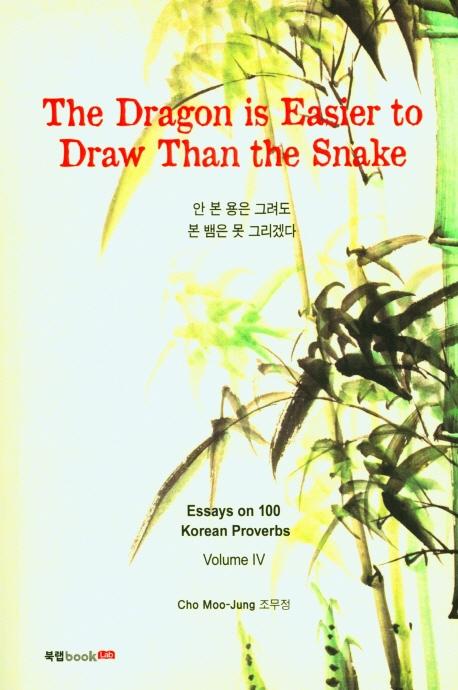





ISBN : 9791168362277 / 226쪽 / 300g / 152 x 225 (㎜)
이 상품에 궁금하신점이 있으세요? 1:1상담문의



아래의 도서와 구매하시면 이 도서들의 적립금을 즉시적용해 드립니다.
-
노은정
-

최익성, 문현웅
-
호메로스
-
홍진기
- 16,920
- 17,100
- 27,000
- 13,500


출판사 리뷰
책 속으로 305. Could a fledgling dove fly over a hill? 햇비둘기 재 넘을까? The master bedroom on the second floor of our North Carolina home had a small three-sided balcony, about two by five feet. The three-foot vertical rails surrounded it every five inches or so. The bottom was made the same way. They were all made of cast iron with curved support and painted black. If I may say so, it looked very nice and elegant against the beige stucco surface of the house. Every spring, we would place two baskets of Boston fern on the floor of the balcony. We bought them in a green plastic pot from Home Depot and just put them out there. Late in the fall I simply threw them away. Along the top of the rail, we used to place two identical three-foot-long rectangular pots end to end. These were once again from Home Depot, reasonably priced green plastic affairs, made in China. Here, we planted various annuals like petunia or vinca. They were held with bottom supports that hooked on the vertical rails. On one early spring day, a mourning dove laid four eggs right on the rectangular pot. A finch did the same but on the floor of the balcony, just beside the pot holding Boston fern. In both cases, their nests were not what I would expect for raising chicks: just piles of sprigs and pine needles were thrown in haphazardly. There was no engineering to speak of or aesthetics to praise about. Every Saturday morning when I had to water the plants, I would open the door to the balcony very slowly lest they startle. The dove, ever nervous, would cry out a short burst of noise and take off to a nearby tree leaving the eggs behind. It always made me feel sorry and guilty. The following year, no finch showed up. Instead, a dove built a nest beside the fern on the floor and laid two eggs. Since the bottom was just an extension of the side rail, there was no way for a pile of pine needles to stop the cold air underneath. It was too late to place cardboard below the nest with two eggs already inside. The only thing I could do to keep the eggs continuously warm was watering the plants without having the dove leave the nest. I would open the balcony door as slowly as I could and start to water the annuals first, furthest away from the dove family. In a few weeks, the dove did not fly away even when I watered the fern, right beside her. She kept on resting over the eggs. My own Pavlov experiment of conditioning was successful and we were all happy. As the weather warmed up nicely with the month of May coming along, I noticed the mother dove taking a break more often. She just sat on a tree less than 10 feet away, watching closely what I was up to. In due time, the eggs hatched and the two babies were growing very fast. On one particular Saturday morning, the mother was away leaving her two babies in the nest when I watered the plants. They did not seem to mind my watering activity. The following Saturday morning, when I opened the door, the mother wasn’t there, but one baby dove jumped, flipping vigorously its wing. Thanks to this effort, she or he landed on the soft grass instead of on the brick pathway in the front of the house. I saw the mother immediately landing on the ground within a foot of her baby. I did not know where she had been but I was more concerned about the fledgling baby, who was now moving about a bit, more importantly, all in one piece. I hurriedly came downstairs and went out to the lawn. I caught the baby dove using a baseball hat. The baby was surprisingly docile and calm. The darkness inside the hat did the trick. I ran upstairs and gently placed the bird back on the nest beside its sibling. This baby appeared to be in shock with both legs all spread out outwardly. Later on that evening, however, the dove family all got together in an easy grace and appealing peace. The next morning, on May 12th of 2013, Sunday, I found only one baby dozing off in the nest. A quick glance to the outside failed to locate either the sibling or mother dove. I assumed that the baby took the first flight with the mother’s approval and encouragement. When I came home from the church, I found a dead baby dove right in the front yard, several feet from where one would expect from the virgin flight out of the balcony. The first thing I discovered was scattered feathers, then a bloody body with exposed internal organs. I buried him in a shallow grave just under the bluebird house. On the balcony upstairs, I found an empty nest. Everyone had left. The above proverb asks if a fledgling pigeon could fly over the small hill yonder. If they do, however, they may encounter a red fox or a hawk. This is the same as asking young people if can handle their first assignment in their first job. They should be able, so long as they can identify and avoid adversary. (12/02/20) - 28~29쪽 375. The dragon is easier to draw than the snake. 안 본 용은 그려도 본 뱀은 못 그리겠다. The dragon exists only in our imagination and thus anybody’s drawing of a dragon is as real as others’. No one can argue about which is a better presentation. Snake is a different story: everyone has seen a few snakes in their lifetime and thus has a definite idea as to which drawing looks real and best. One can write a scholarly tome on contemporary abstract paintings, say, by Mark Rothko or Jackson Pollock, but they depend mainly on our imagination. To untrained eyes like mine, they are like reviewing drawings of a dragon. More realistic paintings, such as those by Norman Rockwell or Andrew Wyeth, are easier to appreciate because we are familiar with the subjects of their paints. A Thanksgiving dinner of a big family, the famous scene of Rockwell’s painting, is something we all experience and easy to identify ourselves with. Wyeth’s Christina’s World or Winter 1946 provokes some darker stories that would require some imagination. Some of M.C. Escher’s artworks call for a somewhat different type of imagination, close to fantasy. Then, of course, there are renaissance paintings and those by impressionists we all love. According to the above proverbs, realistic paintings are more difficult for an artist to draw albeit easier for us to enjoy. That is probably because there can be too many critics, who would say “No, that doesn’t look like a snake at all!” What can average Joe say about Number 17A by Jackson Pollock, which was sold to a private collector at a price of $200 million? The crux of the above proverb could be that we can easily develop a certain imagination or fantasy, but difficult to reveal a truth or the fact of a matter. The infection by delta variant of the coronavirus SARS-CoV-2 has been a hot issue lately. Just the other day, on July 30, the headline of a CNBC article read: “CDC study shows 74% of people infected in Massachusetts Covid outbreak were fully vaccinated.” Earlier another article appeared on June 25 in the Wall Street Journal. It introduced a study from Tel Aviv indicating that there was no difference in infection rate between vaccinated and unvaccinated groups among the newly infected people in Israel. At first glance, this is not what we, fully vaccinated people, have been expecting and sounds rather alarming. And yet, we all know for a fact that the hospitalization rate or the mortality rate of the fully vaccinated population is extremely low. These two seemingly contradicting reports are creating some confusion among the learned population. Here, I would like to submit a possible explanation. The attempt is in reflection of what is implied in the above proverb: truth is hard to come by while speculation can be a dime a dozen. Whether a person is infected or not is usually determined by a PCR (polymerase chain reaction)-based, fully automated test that is readily accessible nowadays. It is sensitive and specific. In essence, it directly detects the presence of the genetic code of the virus. Amplification of a diagnostic signal is an integral part of the procedure. If a quantitative analysis of viral load is required, one just looks at how much amplification is involved. The routine test uses such bodily fluid as saliva. The procedure is used in most epidemiological studies. Here, a positive test result means “infection.” The coronavirus enters our body through the lung epithelial cells on the lung surface upon binding on its target, ACE 2 (angiotensin-converting enzyme 2). The cell membrane to which the virus is attached invaginates, a process called receptor-mediated endocytosis. Ideally, to prevent infection, this is the step we must block, like sentries stopping intruders at the gate. To the best of my knowledge, vaccines currently available do not generate antibodies of IgA type that could prevent virus particles from binding their receptor ACE 2 on the cell surface. The keyword here is “cell surface.” What we produce upon vaccination would be antibodies of IgM followed by IgG on booster injection. These antibodies bind viruses that have already infected systemically. The antibody-virus interaction is similar to the key-lock pair in that they are specific and once formed the resulting immune complex could no longer behave as the free virus would. This is the neutralization step that will stop the respiratory disease. In terms of “infection,” we are all equally hapless regardless of the status of vaccination. This hypothesis is consistent with the field reports from Tel Aviv and Provincetown, MA. One could predict that the infection rate might be even higher among the vaccinated people if they behave recklessly with a sense of assurance from vaccination. A word of precaution: this essay deals with a hypothesis, which could serve as misinformation. (08/02/2021) - 168~169쪽

-
- 저자 : 조무정

FOREWARD
ACKNOWLEDGMENT
INTRODUCTION
301.\tA crying baby gets fed. 우는 아이 젖 준다.
302.\tNothing to eat at well-publicized feasts. 소문난 잔치에 먹을 것 없다.
303.\tA one-year-old teardrop. 작년에 괸 눈물이 금년에 떨어진다.
304.\tTake a pheasant along with her eggs. 꿩 먹고 알 먹는다.
305.\tCould a fledgling dove fly over a hill? 햇비둘기 재 넘을까?
306.\tEvery success to my credit, all failures to ancestors. 잘되면 제 탓, 안되면 조상 탓.
307.\tWild but pretty apricot. 빛 좋은 개살구.
308.\tSurviving without teeth but with the gum. 이가 없으면 잇몸으로 산다.
309.\tNo help from too many helpers. 주인 많은 나그네 밥 굶는다.
310.\tAn unlucky hunter catches a bear without the gallbladder. 재수 없는 포수는 곰을 잡아도 웅담이 없다.
311.\tLose a pheasant while chasing a sparrow. 참새 잡으려다 꿩 놓친다.
312.\tWind for the flour vendor, rain for the salt salesman. 밀가루 장사하면 바람이 불고, 소금 장사하면 비가 온다.
313.\tA fan in the fall. 추풍선 같다.
314.\tEating cooled porridge. 식은 죽 먹기.
315.\tAn arrow in the air, water on the ground. 쏘아 놓은 살이요, 엎지른 물이라.
316.\tShallow water shows the pebbles underneath. 물이 얕으면 돌이 보인다.
317.\tBeating the boulder with an egg. 달걀로 바위 치기다.
318.\tA tiger out of woods, fish out of water. 산 밖에 난 범이요, 물 밖에 난 고기라.
319.\tKnowing one thing only. 하나만 알고 둘은 모른다.
320.\tReceiving a forced salute. 억지로 절 받기다.
321.\tCount chickens in the fall that hatched in the spring. 봄에 깐 병아리 가을에 와서 세어 본다.
322.\tWhen ready for shopping, the market is closed. 망건 쓰자 파장난다.
323.\tThe catacomb is just outside the front gate. 대문 밖이 저승이라.
324.\tEven water, once frozen, can be broken into pieces. 물도 얼음이 되면 부러진다.
325.\tMy blood boils. 오장이 뒤집힌다.
326.\tAn immature moo-dang kills a person. 선무당이 사람 잡는다.
327.\tDon’t bother to look at trees you can’t climb up. 오르지 못할 나무는 쳐다보지도 말라.
328.\tSmall streams produce dragons. 개천에서 용 난다.
329.\tSlippery cobbles after pebbles. 조약돌을 피하니까 수마석을 만난다.
330.\tFallen leaves asking pine needles to be quiet. 가랑잎이 솔잎더러 바스락거린다고 한다.
331.\tA cow’s walk to a slaughterhouse. 푸줏간으로 들어가는 소걸음.
332.\tMust face the sky to pick a star. 하늘을 봐야 별을 따지.
333.\tJeong lost over distance. 멀리 있으면 정도 멀어진다.
334.\tEven a ghost won’t understand you if you are quiet. 말 안 하면 귀신도 모른다.
335.\tA man with a sword is felled with a sword. 칼 든 놈은 칼로 망한다.
336.\tTemptation to have red-bean gruel. 팥죽 단지에 생쥐 들랑거리듯 한다.
337.\tMud of clay holds water. 굳은 땅에 물 고인다.
338.\tTadpoles in a well. 우물 안 개구리.
339.\tA rabbit startled from his own flatus. 토끼가 제 방귀에 놀란다.
340.\tNonsense from a well-fed man. 익은 밥 먹고 선소리한다.
341.\tDenuded pheasant. 털 뜯은 꿩 모양이다.
342.\tYour eyes are your glasses. 자기 눈이 안경이다.
343.\tThe full moon also wanes. 달도 차면 기운다.
344.\tA village calf remains a calf, never a bull. 동네 송아지는 커도 송아지다.
345.\tA drum in the neighborhood. 동네북이다.
346.\tRaising the floor lowers the ceiling. 마루가 높으면 천장이 낮다.
347.\tA flaw in a gem. 옥에 티가 있다.
348.\tThe more you bang the drum, the more noise you create. 북은 칠수록 소리가 난다.
349.\tEven a river dries up if used. 강물도 쓰면 줄어든다.
350.\tPrairie after mountains. 태산을 넘으면 평지를 본다.
351.\tFlowers from a dead tree. 죽은 나무에 꽃이 핀다.
352.\tSlapping face follows enticing. 어르고 뺨친다.
353.\tA big snake climbing over a wall. 구렁이 담 넘어 가듯 한다.
354.\tA wealthy family at the expense of three villages. 부자 하나면 세 동네가 망한다.
355.\tPlacing persimmons and pears at a jesa. 남의 집 제사에 감 놓아라 배 놓아라 한다.
356.\tLicking a watermelon. 수박 겉핥기.
357.\tThree-inch togue ruins five-foot body. 세 치 혀가 다섯 자 몸 망친다.
358.\tTime is the medicine. 세월이 약이다.
359.\tWearing a silk dress in the dark night. 비단옷 입고 밤길 간다.
360.\tSky seen through the eye of a needle. 바늘 구멍으로 하늘 보기.
361.\tA ship with multiple captains climbs up a mountain. 사공이 많으면 배가 산으로 올라간다.
362.\tEat the liver of a flea. 벼룩의 간을 내어 먹는다.
363.\tA sheet of paper is lighter when lifted together. 백지장도 맞들면 낫다.
364.\tCats cleansing their faces. 고양이 세수하듯 한다.
365.\tBad news travels faster. 나쁜 소문은 빨리 퍼진다.
366.\tChicken and cow glancing each other. 닭 소 보듯, 소 닭 보듯 한다.
367.\tEven a flea has a face to carry around. 벼룩도 낯짝이 있다.
368.\tLicorice to a medicine man. 약방에 감초.
369.\tJumping with a dagger between teeth. 칼 물고 뜀뛰기한다.
370.\tMeet the lover, pick the mulberry as well. 임도 보고 뽕도 딴다.
371.\tA thief finds his legs asleep. 도둑이 제 발 저리다.
372.\tOld sayings are without flaws. 옛말 그른 데 없다.
373.\tFixing the barn after the cow escapes. 소 잃고 외양간 고친다.
374.\tDeep water attracts fish. 물이 깊어야 고기가 모인다.
375.\tThe dragon is easier to draw than the snake. 안 본 용은 그려도, 본 뱀은 못 그리겠다.
376.\tPull a sword out to fight a mosquito. 모기 보고 칼 빼기 한다.
377.\tBlood on the foot of a bird. 새 발의 피다.
378.\tWaiting for a morning moon early at dusk. 새벽달 보자고 초저녁부터 기다린다.
379.\tCatching a mouse without breaking a jar. 독 깨질까 쥐를 못 잡는다.
380.\tClose the eyes, lose the nose. 눈 감으면 코 베어 가는 세상.
381.\tA toddler playing around an open well. 우물가에 애 보낸 것 같다.
382.\tCan you spit on a smiling face? 웃는 낯에 침 뱉으랴?
383.\tWithout the tiger, rabbits are the master. 범 없는 골에 토끼가 스승이다.
384.\tA dull-witted horse pulls ten wagons. 둔한 말이 열 수레를 끈다.
385.\tLoss is part of business. 한 푼 장사에 두 푼 밑져도 팔아야 장사.
386.\tA cantankerous bullock with horns on the hip. 못된 송아지 엉덩이에 뿔난다.
387.\tA sage follows the aged custom. 성인도 시속을 따른다.
388.\tA bellybutton bigger than the belly. 배보다 배꼽이 더 크다.
389.\tIll comes often on the back of worse. 흉년에 윤달 온다.
390.\tNeither push nor pull is an option. 빼도 박도 못 한다.
391.\tFanning a burning house. 불난 집에 부채질한다.
392.\tSee neither a bottom nor an end. 밑도 끝도 없다.
393.\tGood times pass fast. 신선 놀음에 도낏자루 썩는 줄 모른다.
394.\tHaving wasabi in tears. 울며 겨자 먹기.
395.\tScold in private, praise in public. 책망은 몰래 하고 칭찬을 알게 하랬다.
396.\tGet to blow a trumpet thanks to the boss. 원님 덕에 나팔 분다.
397.\tA mute with troubled thoughts. 벙어리 냉가슴 앓듯 한다.
398.\tNo news is good news. 무소식이 희소식이다.
399.\tA mayfly attacking fire. 하루살이 불 보고 덤비듯 한다.
400.\tVacillating between the gallbladder and the liver. 간에 붙고 쓸개에 붙는다.
INDEX (in essay number)

