









출고예상일 안내
주문하신 상품이 한국에서 현지 배송을 위한 출고단계가 이루어질 것으로 예상되는 날짜입니다. 상품을 준비하는 과정에서 내부적인 사정으로 인해 출고예상일에 다소 오차가 생길 수 있습니다.
여러 상품(예약상품포함)을 함께 주문하신 경우 출고예상일이 가장 늦은 날짜에 맞춰 함께 배송됩니다.


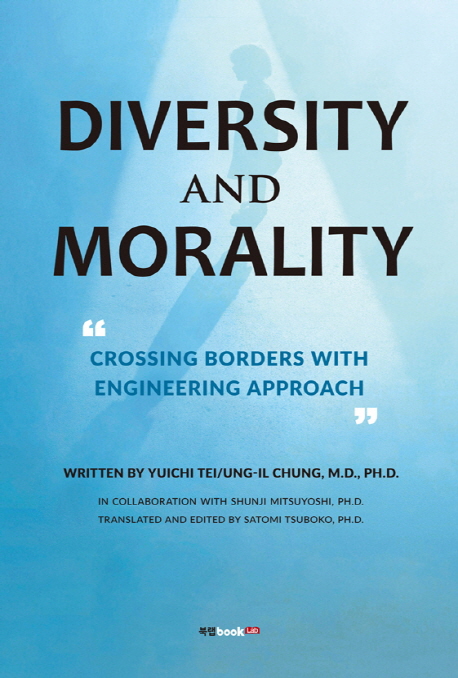









ISBN : 9791159877711 / 192쪽 153 x 227 (㎜)
이 상품에 궁금하신점이 있으세요? 1:1상담문의



아래의 도서와 구매하시면 이 도서들의 적립금을 즉시적용해 드립니다.
-

호메로스
-
헥토어 하르쾨터
-
장세림
-
- 27,000
- 43,200
- 21,600
- 15,300


출판사 리뷰
What is Morality? Is the definition of good and evil something arbitrarily determined by someone? Does morality vary along with areas, cultures, and eras? Does morality, after all, have any common principle? Do studies of morality, such as moral philosophy and ethics, end up in mere descriptio... What is Morality? Is the definition of good and evil something arbitrarily determined by someone? Does morality vary along with areas, cultures, and eras? Does morality, after all, have any common principle? Do studies of morality, such as moral philosophy and ethics, end up in mere descriptions of different, miscellaneous moral systems? If your child questions like “Can homicide be condoned in capital punishment?”, can you provide a proper and sufficient answer as a parent? Ung-il Chung, M.D., Ph.D., Professor of Department of Bioengineering at University of Tokyo Graduate Schools of Engineering and Medicine, offers the solutions with scientific and logical way as follows : 1. Presentation of Problems: Analyzing the Current Status of Morality 2. Previous Studies: Studying Prior Moral Thoughts 3. Construction of Models: Modeling the Basic Principles of Morality 4. Development of Applications 1: Do Animals Have “Morality”? 5. Development of Applications 2: Relationship between Morality and Language 6. Simulations and Prediction: How Should We Live?

-
- 저자 : 정웅일

Introduction … 006
1. Presentation of Problems : Analyzing the Current Status of Morality … 014
2. Previous Studies : Studying Prior Moral Thoughts … 029
3. Construction of Models : Modeling the Basic Principles of Morality … 056
4. Development of Applications 1 : Do Animals Have “Morality”? … 094
5. Development of Applications 2 : Relationship between Morality and Language … 116
6. Simulations and Prediction : How Should We Live? … 140
Afterword … 179
Reference (Japanese / English) … 182
Apostille … 191

