









출고예상일 안내
주문하신 상품이 한국에서 현지 배송을 위한 출고단계가 이루어질 것으로 예상되는 날짜입니다. 상품을 준비하는 과정에서 내부적인 사정으로 인해 출고예상일에 다소 오차가 생길 수 있습니다.
여러 상품(예약상품포함)을 함께 주문하신 경우 출고예상일이 가장 늦은 날짜에 맞춰 함께 배송됩니다.


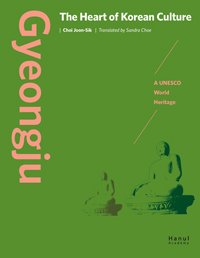





ISBN : 9788946044340 / 304쪽 167 x 214 (㎜)
이 상품에 궁금하신점이 있으세요? 1:1상담문의



아래의 도서와 구매하시면 이 도서들의 적립금을 즉시적용해 드립니다.
-
유시민
-
니토 아쓰시
-

김용옥
-
스네자나 로렌스
- 17,010
- 18,000
- 18,000
- 24,300


출판사 리뷰
출판사 서평 천년 왕국이 살아 숨 쉬는 세계문화유산의 도시, 경주! Gyeongju, The Origins of Modern Korean Culture! 경주는 ‘노천 박물관’이라 불린다. 유적이 도시 곳곳에 고르게 산재해 있을 뿐만 아니라 어느 곳을 파든 아직도 유물이 나오는 지역이 많기 때문이다. 아마도 한국에 경주만큼 문화재가 집약적으로 있는 도시나 지역은 없을 것이다. 경주에는 가장 중요한 유적인 국보만 해도 33점이 있고, 중요도에서 결코 국보에 뒤지지 않는 보물도 83점이나 있다. 그런가 하면 보존해야 할 장소인 사적(史蹟)은 7... 천년 왕국이 살아 숨 쉬는 세계문화유산의 도시, 경주! Gyeongju, The Origins of Modern Korean Culture! 경주는 ‘노천 박물관’이라 불린다. 유적이 도시 곳곳에 고르게 산재해 있을 뿐만 아니라 어느 곳을 파든 아직도 유물이 나오는 지역이 많기 때문이다. 아마도 한국에 경주만큼 문화재가 집약적으로 있는 도시나 지역은 없을 것이다. 경주에는 가장 중요한 유적인 국보만 해도 33점이 있고, 중요도에서 결코 국보에 뒤지지 않는 보물도 83점이나 있다. 그런가 하면 보존해야 할 장소인 사적(史蹟)은 77곳이나 되고, 국가지정문화재도 316점에 이르며, 고분 역시 수백 기나 된다. 그래서 도시 전체가 세계문화유산이 된 것이다. 유네스코가 경주를 세계문화유산으로 선정한 것은 2000년의 일인데 이렇게 광범위한 ‘도시 전체가 세계문화유산’으로 등재된 것은 흔한 경우가 아니다. Gyeongju is often called a 'museum without walls'. Not only are relics scattered evenly over the entire city, they can be easily found in whatever area you dig. There is probably no other city or region in Korea in which cultural properties are so heavily concentrated; there are 33 National Treasures, the most important type of relic, as well as 83 Treasures. There are also 77 preserved historic sites, over 316 designated cultural properties and hundreds of old tombs. ◎ 이 책은 경주는 하나의 도시가 아니다. 경주는 주지하다시피 천년 왕국인 신라의 수도였다. 그 신라의 문화는 지금 우리에게 면면히 이어졌다. 우리에게 경주는 하나의 도시로 그치는 것이 아니라 한국인의 문화적 원형 혹은 고향이라고 해도 과언이 아닐 것이다. 그런 경주이기에 진즉에 이 도시는 통째로, 아니 정확히 말하면 다섯 개의 지구로 나뉘어 유네스코가 선정한 세계문화유산에 등재되었다. 이 책은 바로 그 세계문화유산을 중심으로 경주에 대해 서술하고 있다. 단순한 소개 차원에 그치는 것이 아니라 쟁점이 되는 주제에 대해서도 간단하게나마 소개함으로써 깊이를 더하려고 노력했다. Gyeongju, where Korea’s most cultural sites are situated, is known to be the most popular destination for foreign tourists next to the capital, Seoul. Gyeongju is a meaningful place not only for Korean people but for the international community. The city of Gyeongju is divided into five districts that are collectively called the Gyeongju Historic Areas and registered on the UNESCO World Heritage List. Because these five districts are representative of Gyeongju, we will base our tour on what can be seen in these districts. Just looking at the artifacts and relics in these five districts can provide a good overall grasp of Silla culture. These five districts include: Namsan District, the treasure chest of Buddhist art; Wolseong District, the site of palace architecture of the thousand-year-empire; Daeneungwon District, where royal tombs of the early Silla kings can be found; Hwangnyongsa District, the center of Silla Buddhism; and Myeonghwalsanseong Fortress, the bastion of ancient Silla’s national defense facilities. Of these, this book will deal with Namsan District and the ancient tombs in detail. ◎ 신간 출간의의 우리나라에는 경복궁이나 창덕궁, 종묘 같은 세계적인 문화유산에 대해 영문으로 심도 있게 설명한 책이 없었다. 물론 브로슈어처럼 간단한 소개서는 있었지만 인문학적인 차원에서 심층적으로 소개한 책자는 없었던 것이다. 노상 한국방문의 해를 제정해 관광입국을 부르짖으면서도 인문학적인 준비는 극도로 소홀했던 것이다. 서울 다음으로 외국인들이 많이 찾는 유적지인 경주에 가면 사정은 훨씬 더 심각하다. 영문으로 경주를 서술한 책은 기본적인 정보만 제공하는 한두 권의 책 빼고는 없기 때문이다. 그렇다고 한글로 풍부하게 쓴 책이 많은 것도 아니다. 경주의 주요 유적지를 두루두루 방문하고 싶은 사람에게 쉬우면서도 심층적인 지식을 줄 수 있는 책을 찾기란 쉽지가 않다. 물론 석굴암이나 왕릉처럼 한 지역이나 주제를 가지고 서술한 책은 적지 않게 있다. 이 책처럼 경주에 있는 가장 중요한 유적들을 망라했을 뿐만 아니라 심층적으로 분석한 책은 잘 발견되지 않는다. 그리고 경주를 찾는 외국인들을 위해 영문으로도 번역해 별도의 단행본을 구성했다. 영문판은 한국어판보다 양이 조금 적다. 그것은 한국인들에게는 이슈가 될 수 있지만 외국인들에게는 관심이 없을 수 있는 주제들을 뺐기 때문이다. Despite the city’s greatness, there are no in-depth books written in English that discuss historic sites and cultural relics of Gyeongju yet. It is so regrettable, that I decided to publish books in both Korean and English. This is an English version. Here, I mainly focus on cultural remains inscribed on the World Heritage List, rather than covering everything with regard to Gyeongju. In addition, compared to the Korean edition, I revised contents that require too much historical background for foreigners to understand. Nonetheless, as the book fully covers the important places and cultural remains in Gyeongju, it will satisfy your curiosity. ◎ 예상 독자층 경주 여행, 답사에 관심 있는 독자. 한국문화, 신라역사

-
- 저자 : 최준식

From a Western perspective, it is easy to think of Gyeongju as having been a minor city on the periphery of the Eastern world, but nothing could be farther from the truth. I remember what a colleague who is a Silk Road specialist once told me. Let us say that there is a hairpin that was in vogue among noblewomen in Constantinople, one of the four great ancient cities of the world that was mentioned earlier. It would have taken only six months for that hairpin to end up in the hair of a Silla noblewoman. Many such items probably came into Gyeongju after a great deal of travel over roads and deserts, and a fraction of these would have been sent to Japan as well. (12p)
Even Koreans living in the scientific age were only able to find the answer to this question toward the end of the twentieth century. The secret lies in a stream that flows under the floor. The Japanese who discovered Seokguram Grotto during the colonial period in the early twentieth century praised its artistry and skillful construction as ‘unsurpassed by any in East Asia,’ and promptly began rehabilitation work on it. What they discovered under the floor was a small stream. This was summarily blocked up, not considered to be very important. Cement, a high-tech building material at the time, was used to cover and seal off the top of the dome as a final step. Air circulation inside Seokguram Grotto became impossible. (54~55p)
This roof tile has one interesting feature. If you look closely at the middle part of the tile, you can see that a human face has been drawn in a very comical manner. Only a few simple lines were used to draw a laughing expression on the face. One thing we must keep in mind here is that as a stern and solemn royal temple, little ‘jokes’ like this would have been prohibited. This picture was probably carved in by the artisan who created this temple and this type of humor is found in Silla clay figurines as well. It is nearly impossible to find examples of these types of pranks in places as important as the royal temple in neighboring China or Japan, but Koreans enjoy it in a variety of settings. (170p)
What is even stranger is that it has sounded for 1,200 years and still makes the most beautiful sound in the world. But most people who see this bell do not seem to think that it is so odd. But how is it that a 1,200 year old object can still fulfill its function? Also, because a bell is continuously beaten, there is no knowing when it will crack. This is why it is so amazing that it has survived in one piece to this day without needing repair. If a crack forms on the surface or a piece breaks off altogether, it is extremely difficult to repair; considering this we can conclude that there have been no problems since its construction. It is impossible to not wonder how this bell could have lasted in perfect condition for over a century. It is the luxury good of luxury goods. It was hit 33 times exactly once a year on December 31st until the early 1980s. (265p)

목차
Foreword : Why Gyeongju?
What kind of place is Gyeongju?
1. The Holy Land of Korean Buddhism, Gyeongju
- Seokguram Grotto: The Prototype of Korean Buddhism
- Bulguksa: Realizing Buddha Land on earth
2. City of the 1000 Years Old Dynasty, Gyeongju
- In Downtown Gyeongju
- Inside the royal tombs of Silla: The treasure chest of Silla culture
- Mount Nam: The Holy Land of Koreans Past and Present
- At the Gyeongju National Museum
Afterword: Between Development and Preservation

