









출고예상일 안내
주문하신 상품이 한국에서 현지 배송을 위한 출고단계가 이루어질 것으로 예상되는 날짜입니다. 상품을 준비하는 과정에서 내부적인 사정으로 인해 출고예상일에 다소 오차가 생길 수 있습니다.
여러 상품(예약상품포함)을 함께 주문하신 경우 출고예상일이 가장 늦은 날짜에 맞춰 함께 배송됩니다.


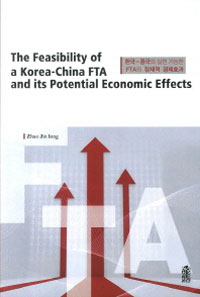
The Feasibility of a Korea-China FTA and its Potential Economic Effects 한국-중국의 실현 가능한 FTA와 잠재적 경제효과
Zhao Jin Iong 저 | 한국학술정보 | 2012년 12월





ISBN : 9788926838938 / 218쪽 148 x 210 (㎜)
이 상품에 궁금하신점이 있으세요? 1:1상담문의



아래의 도서와 구매하시면 이 도서들의 적립금을 즉시적용해 드립니다.
-

정지훈
-

한정수(세상학개론)
-

모리타 다카코
-

이석진
- 25,200
- 21,600
- 16,650
- 21,600


출판사 리뷰
출판사 서평 This dissertation examines the feasibility and effects of the China-Korea free trade agreement (CK FTA) in various sectors of the two countries’ economies using a general equilibrium model and incorporating the most recent Global Trade Analysis Project Database. Above all, both China and Korea’s FTA... This dissertation examines the feasibility and effects of the China-Korea free trade agreement (CK FTA) in various sectors of the two countries’ economies using a general equilibrium model and incorporating the most recent Global Trade Analysis Project Database. Above all, both China and Korea’s FTA strategies together with their respective FTA motives are elaborated, given by the demonstration and analysis of two countries’ trade features, trade structures and bilateral investment. According to the analysis on Korea and China’s trade relations, the industrial advantages and disadvantages between the two countries are matched against the Revealed Comparative Advantage index and Intra-Industry Trade index.

-
- 저자 : Zhao Jin Iong

목차
ABSTRACT
CHAPTER
1
Introduction
01. Background of Free Trade Agreements(FTA)
02. The Development of FTAs in the world
03. Background of China-Korea Free Trade Agreement
04. Paper Structures
CHAPTER
2
A Comparison between Korea and China’s FTA strategies
01. Korea’s FTA Strategy and Its Motivation
1.1. The Background of Korea’s FTA strategy
1.2. The Features of Korea’s FTA Strategy
1.3. The Motives of Korea’s FTA strategy
02. China’s FTA Strategy and Its Motivation
2.1. The Background of China’s FTA Strategy
2.2. The Motives of China’s FTA Strategy
03. A Comparison of Korea and China’s FTA Strategies
3.1. Both FTA Strategies Share Multi-track Basis but Have Different Features
3.2. Both FTA Strategies are affected by Liberalization Process
3.3. Both FTA Strategies have Profound Political Considerations
3.4. Korea’s FTA Process has a Comparative Advantage on its Strategic Tactics
04. Summary
CHAPTER
3
Economic Relations between China and Korea
01. Trade and Investment Patterns between Korea and China
1.1. Trade Status Quo between Korea and China
1.2. Trade Structures and Characteristics between China and Korea
1.3. Deepening Investment Relations
1.4. Trade Balance between China and Korea
1.5 Trade Policy
02. A Competitiveness and Complementariness Research of Korea and China’s Industries
2.1. An Analysis of RCA Index
2.2. Technological Classifications of Exports
2.3. The Intra-Industry Trade Analysis between Korea and China
CHAPTER
4
Theoretical Analysis of the Korea-China FTA
01. Analysis from FTA Theories
1.1. Trade Diversion and Trade Creation
1.2. Domino Theory of FTAs
1.3. Rules of Origins (ROOs) and the Spaghetti Bowl Theory
1.4. Hub and Spoke Theory
02. Need for a Korea-China FTA: Alternative Thinking
2.1. Promotion of Bilateral Intra-Industry Trade and Comparative Advantages
2.2. A Buffer for the Economic and Political Tensions
2.3. Restructuring two Countries’ Vulnerable Domestic Industries
2.4. A Proof from Regionalism
CHAPTER
5
Potential Economic Effects of a Korea-China FTA
01. CGE Models and Global Trade Analysis Project System
1.1. Introduction of the CGE model
1.2. The Global Trade Analysis Project (GTAP) and Its Model Structures
1.3. Existing Research on Korea-China FTA Using CGE Models
1.4. Model Aggregation for a Korea-China FTA
02. The China-Korea FTA’s Potential Economic Impact
2.1. Economic Effects on Welfare
2.2. Economic Effects of a China-Korea FTA on Trade
2.3. Economic Effects of a China-Korea FTA on Outputs
2.4. Effects of a China-Korea FTA on Demand Changes for Production Factors
CHAPTER
6
Conclusions
01. Summary
02. Policy Implications
Acknowledgements
References
Appendix 1
Appendix 2

