









출고예상일 안내
주문하신 상품이 한국에서 현지 배송을 위한 출고단계가 이루어질 것으로 예상되는 날짜입니다. 상품을 준비하는 과정에서 내부적인 사정으로 인해 출고예상일에 다소 오차가 생길 수 있습니다.
여러 상품(예약상품포함)을 함께 주문하신 경우 출고예상일이 가장 늦은 날짜에 맞춰 함께 배송됩니다.


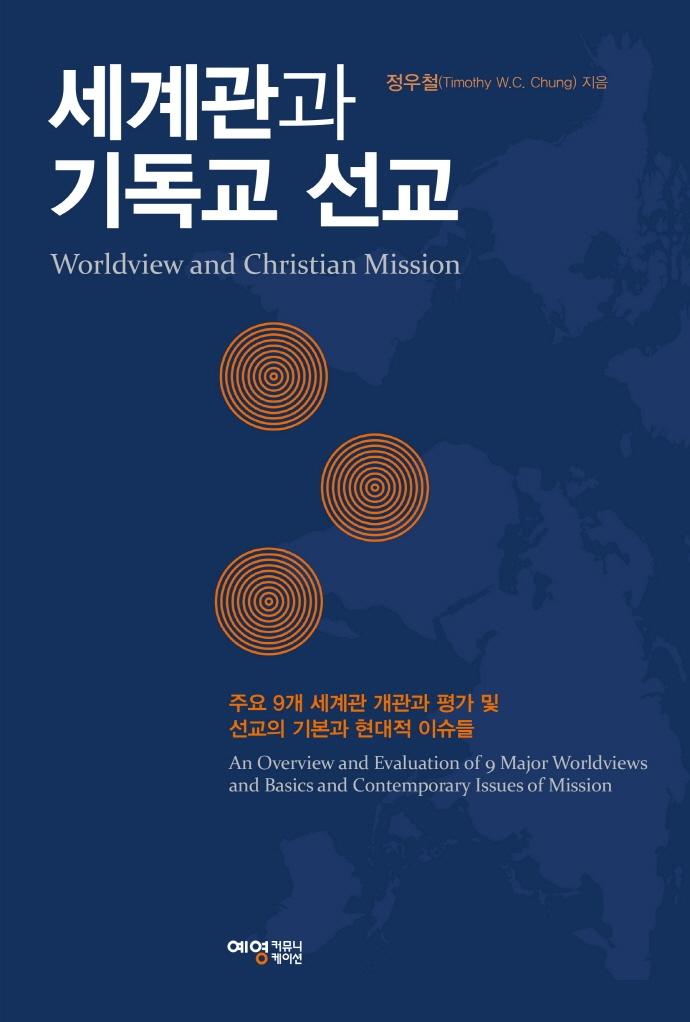





ISBN : 9791189887360 / 332쪽 152 x 223 (㎜)
이 상품에 궁금하신점이 있으세요? 1:1상담문의



아래의 도서와 구매하시면 이 도서들의 적립금을 즉시적용해 드립니다.
-

레이 오틀런드, 자니 오틀런드
-

-

이정화
-

- 15,300
- 14,400
- 18,000
- 9,000


출판사 리뷰
이 책의 특징을 다시 정리하면 다음과 같다.
■ 선교 성패에 관건이 되는 피전도자의 세계관 변화를 위한 세계 주요 아홉 개 세계관 개관 및 평가를 정리하였다.
■ 세계관의 상황이 되는 문화와 종교의 선교적 이해를 넓혀 준다.
■ 현대 세계관 이슈들을 기독교 전도와 선교에 연결하여 잘 설명해 주고 있다. 그리하여 세계관 전도의 필요와 내용과 전략을 다각도로 잘 다루어 주고 있다.
■ 주요 선교 신학 주제에 대한 신학적 관점을 요약해 준다.
■ 이상의 내용을 대학원 강의 수준에서 한국어와 영어로 병기하여 (마주보기 편집으로) 읽고 공부하기 편하게 배치해 놓았다. 이를 통해 선교사들의 국제적 활동에 큰 도움을 준다.

-
- 구분 : 저서
- 이름 : 정우철
- 국적 : 대한민국
- 직업 :
- 분류 : 역사/종교학자 , 기타
- 인기지수 [2]
-


- [최근저서]전체보기
- 세계관과 기독교 선교

하나님은 문화 속에서 일하신다. 그래서 그의 영원한 말씀은 특정한 문화 속에 살고 있는 인간 저자가 중요 문화 요인인 인간의 언어로써 성경으로 기록하였다. 그런데 사탄도 문화 속에서 일하는데 거짓과 두려움을 사용하여 인간을 창조주 하나님으로부터 멀어지게 한다. 사탄은 육체, 돈, 권력과 성공의 우상 추구가 인간을 생명의 길로 인도한다고 믿도록 인간을 속인다. 이것이 문화의 패러독스다. 그러므로 복음은 한편으로는 문화를 도구로 사용하여 증거되고 전파되어야 하지만, 다른 한편으로는 그 문화의 잘못된 가치들과 세계관을 변화시켜야 한다. 복음의 상황화가 이를 가능하게 해 준다. 올바른 복음의 상황화는 복음의 핵심은 그대로 보존하면서도 그 복음을 듣는 사람의 문화 상황 속에서 이해하고 받아들이도록 하는 것이다. 이는 예수님의 복음은 문화를 변화시키고 초월한다는 것을 전제로 한다. 하나님의 능력인 복음은 문화를 변화시키고 초월한다. _ 33p
God works in cultures and so his eternal Word is written in the Bible by culturally-shaped human authors in human languages which are important parts of cultures, but so does Satan to take humans away from the creator God through deceptions and fear. He deceives humans to believe that the idolatries of flesh, money, power, and success are the way to life. This is the paradox of culture. Therefore, the gospel needs to be witnessed and preached using culture as a vehicle on one hand, but on the other hand, the gospel also needs to transform a culture’s wrong values and worldviews. This is done by what is called contextualization. Correct contextualization enables the gospel to be relevant in the context of the hearers’ culture while keeping the core of the gospel uncompromised. It is also premised on the truth that the gospel of Jesus is meta-cultural. Being the power of God, it transforms and goes beyond cultures. _ 32p
하나님-신, 인간, 세계-현실 등에 관한 큰 질문들은 세계관에 의해서 다루어진다. 이 질문들은 진단적인 것들로서 세계의 기본 구조와 관련된 근본적 가정과 전제들에 대한 단서를 제공한다.21 다시 말하면, 세계관은 이러한 큰 질문에 대한 전제와 가정들이기에 이들 질문에 대한 해답을 제공한다. 다른 세계관은 이러한 큰 질문 혹은 근원적 질문에 대하여 다른 대답을 준다. 서로 다른 여러 세계관이 이 질문들에 대하여 어떻게 서로 다른 대답을 하는지를 이해함으로써 해당 종교도 더 깊이 있게 이해할 수 있게 된다. 왜냐하면, 세계관은 해당 종교의 핵심을 형성하기 때문이다. _ 75p
Big questions on such matters as God-gods, humanity, world-reality, etc. are addressed by worldview. They are diagnostic questions leading to clues to foundational assumptions or presuppositions on the basic make-up of the world.21 In other words, WVs as presuppositions-assumptions on such big questions provide answers to these. Different WVs give different answers to these big questions. By understanding how different worldviews provide different answers to these, one can also understand religions at a deeper level because such worldviews constitute the core of the religions concerned. _ 74p
인간은 마음-이성과 육체의 이중 구조로 되어 있지만 인간의 본성은 타락하였다. 인간의 영성과 본성의 타락에 대한 이해를 강조함으로써 (롬 1-2), 기독교 세계관은 한 인간의 내면 깊숙이 존재하는 염려를 해결할 수 있다. 기독 인간관과 심리학은 사람의 죄성과 이에 대한 구원주의 필요성을 인식하게 하기 때문에 인간의 진정한 자아를 대면하게 해 준다. 우리가 가장 필요로 하는 것은 죄인 자신에 대한 존경이나 자아 실현이 아니라 우리가 하나님에 대해 반역하고 있는 죄인이라는 것을 인식하는 것이다. 그리스도를 구원주로 영접하여야만 그 사람은 자기가 하나님의 형상으로 창조된 귀한 존재라는 것을 알기 시작하고 승리하는 삶을 영위할 수 있다. 기독교 세계관은 인간에게 인간의 죄는 실제라는 것을 인정하고 그 죄에 바로 직면하고 회개할 것을 요구한다. 이것은 유교적인 인간관 속에서 자란 자기 의가 강한 사람들 대부분의 경우에 가장 행하기 어려운 일이 된다(즉, 인간은 태생적으로 선하고 교육과 성격 개발의 수련을 통하여 더욱 개선될 수 있다는 인간관) _ 123p
Heart/mind-Body Dualism but with the fallen nature of Man: With its emphasis on the spiritual and its understanding of man’s fallen condition (Rom. 1-2), the Christian worldview can truly address the innermost concerns of a person. Christian humanism and psychology helps people get in touch with their real selves only because it allows them to recognize their own sinfulness and consequently their need for a Savior. Our greatest need is not self-esteem of the sinful self or self-realization, rather it is the realization that we are sinners in rebellion against God. Only after receiving Christ as Savior can a person begin to understand his value as a creation in God’s image and lead a triumphant life. The Christian worldview calls for one to recognize that one’s sin is real, then to face his sin and repent of it. This is in most cases the most difficult part to carry out for many self-righteous people raised in the Confucian view of man (that humans are inherently good and can be cultivated to be better through education and character-building). _ 122p
세계관 전도의 주요 내용은 누구나 자기 죄를 회개하고 하나님의 성육신인 예수님을 믿고 영원한 생명을 얻게 해 주는 예수님의 복음이다 (요 3:16-17). 그리고 은혜의 하나님은 성령으로 하여금 이 과정을 돕게 하신다. 이것이 타락한 인류와 세상을 하나님의 완전한 창조로 구속하는 방법이다. 하나님은 예수님을 통하여 그 안에서 피조물을 구속하시는데 이는 옛 세계관을 가진 옛 사람들을 복음 세계관을 가진 새 사람들 혹은 예수의 제자들로 회심시키는 과정을 통하여 이루어진다. 한 사람의 진정한 회심은 그의 행위와 예식의 변화뿐만 아니라 그의 세계관의 변화를 수반한다. 이상이 복음의 핵심적 내용이다. 세계관 전도의 내용은 복음 세계관이 강조된 예수님의 복음으로 구성된다. _ 237, 239p
The main content of worldview evangelism is the gospel of Jesus Christ, which enables anyone to repent of their sins and believe in him, the incarnate Son of God, leading them to enjoy eternal life (John 3:16-17). And the gracious God lets his Holy Spirit help them do this. That is how fallen humanity and the world are redeemed as the perfect creation of God. Through and in Jesus Christ, God redeems all creation by the conversion of old persons with old WVs into new persons or disciples of Jesus Christ with new gospel WVs. A true conversion of a person involves not only changes of behavior and rituals but also transformation of one’s worldview. These make up the core of the gospel. Hence, the contents of worldview evangelism consist of the gospel of Jesus, with emphasis on the gospel worldview. _ 236, 238p


i. Recommendations 4
ii. Preface 16
Part I. Culture, Religion, and Ideology
as the Context of Worldview
I. Culture, Religion, Ideology, and Worldview: Relationship between Them based on Culture Models ·26
Part II. A Brief Introduction to Worldview and an Overview & Evaluation of Nine Major Worldviews
II. Worldview: Definition, Traditions, and Significance ·52
III. Religious Symbols and Worldview ·64
IV. Seven Foundational Questions addressed by Worldview ·74
V. Evaluation of Worldview ·84
VI. Christian Worldview: An Overview and How it addresses the Seven Foundational Questions ·94
VII. Competing Worldviews of Naturalism-Secular Humanism (Modernity), Naturalism-Marxism (Socialism/Communism), and Post Modernity: An Overview in the context of the Seven Foundational Questions and Evaluations ·128
VIII. Competing Religious Worldviews of Hinduism, Buddhism, Confucianism, Islam, and Traditional Tribal Religions: An Overview in the context of the Seven Foundational Questions and Evaluations ·150
IX. Overall Assessment of Evaluations of Worldviews ·224
X. Worldview Evangelism: Need, Contents, and Strategy ·234
XI. Christian Living at the Crossroads faithful to Christian Worldview ·246
Part III. Christian Mission:
Basics and Contemporary Issues
XII. A Summary of Theological Perspectives on Basics and Contemporary Issues of Mission for Field Missionaries ·276
References 328
***********************************
i. 추천의 말 4
ii. 저자 서문 17
제1부 세계관의 상황으로서 문화와 종교,
이데올로기
I. 문화, 종교, 사상과 세계관: 문화 모델에 근거한 연관성 ·27
제2부 세계관의 간략 소개와
아홉 개 주요 세계관의 개관 및 평가
II. 세계관: 정의, 전통 및 중요성 ·53
III. 종교적 상징들과 세계관 ·65
IV. 세계관이 다루는 일곱 개의 근원적 질문 ·75
V. 세계관 평가 ·85
VI. 기독교 세계관: 개관 및 일곱 개 근원적 질문에 대한 대답 ·95
VII. 경쟁 관계의 근대-탈근대 시대 세계관(자연주의-세속 인본주의[근대주의], 자연주의-마르크스주의[사회주의/공산주의], 및 탈근대주의): 일곱 개 근원적 질문 중심의 개관 및 평가 ·129
VIII. 경쟁 관계의 주요 종교적 세계관(힌두교 세계관, 불교 세계관, 유교 세계관, 이슬람 세계관 및 전통 종교 세계관): 일곱 개 근본 질문의 상황에 비추어 본 개관과 평가 ·151
IX. 세계관 평가에 대한 전체적 평가 ·225
X. 세계관 전도: 필요와 내용과 전략 ·235
XI. 두 가지 다른 길 앞에서 기독교 세계관에 충실한 크리스천의 삶 ·247
제3부 기독교 선교: 기본과 현대적 이슈들
XII. 현장 선교사를 위한 선교의 기본과 현대적 이슈들에 대한 신학적 관점들 요약 ·277
참고 자료 328

